 Image 1 of 1
Transportation Package.
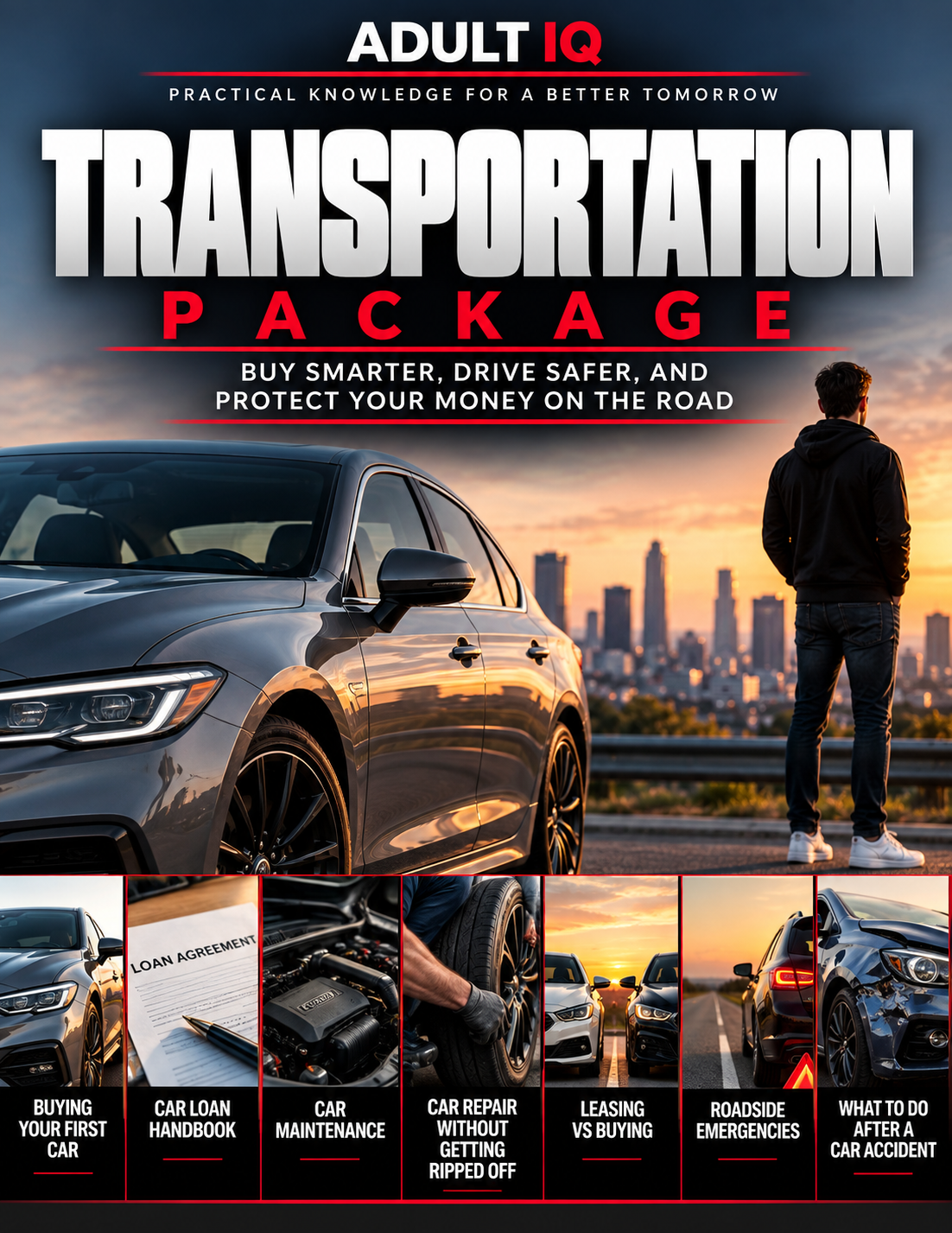
ADULT IQ TRANSPORTATION PACKAGE
Buy Smarter. Drive Safer. Protect Your Money on the Road.
Buying and owning a car is one of the biggest financial responsibilities many adults face. From choosing the right vehicle and understanding car loans to managing maintenance costs, dealing with unexpected breakdowns, and knowing what to do after an accident, there is a lot to learn — and getting it wrong can be expensive.
The problem is that most people are expected to figure these things out as they go. They may not know what to look for when buying their first car, how to compare financing options, whether leasing makes sense, or how to recognise when a repair estimate deserves a second opinion.
The Adult IQ Transportation Package brings together seven practical educational handbooks designed to help you understand vehicle ownership, make more informed decisions, and prepare for the responsibilities that come with driving.
Whether you're buying your first car, comparing leasing and purchasing, managing a car loan, learning basic maintenance, dealing with a repair bill, or preparing for roadside emergencies, this package gives you valuable knowledge to help you approach the road ahead with greater confidence.
WHAT YOU WILL RECEIVE
1. Buying Your First Car
Buying your first car is exciting, but choosing the wrong vehicle or overlooking important costs can turn that excitement into an expensive mistake.
This handbook helps you understand the key considerations involved in researching, selecting, and purchasing a vehicle. Explore the differences between new and used cars, the importance of establishing a realistic budget, and the factors to consider when comparing vehicles.
Learn about vehicle history, inspections, mileage, condition, ownership costs, and the questions worth asking before committing to a purchase. Understand why the advertised price is only part of the overall cost and why insurance, fuel, registration, maintenance, and potential repairs should also be considered.
What you'll gain: A stronger foundation for evaluating vehicles, recognising potential warning signs, asking better questions, and making a more informed first-car purchase.
2. Car Loan Handbook
Financing a vehicle can make a purchase possible, but the wrong loan can leave you paying significantly more than you expected.
This handbook introduces the fundamentals of car financing, helping you understand how loans work and which factors influence the total cost of borrowing.
Explore interest rates, loan terms, down payments, monthly repayments, total interest, and the relationship between the purchase price and the amount financed. Learn why comparing monthly payments alone can be misleading and why the full loan cost matters.
Understand the importance of reviewing loan agreements, checking fees, comparing lenders, and considering how repayments fit into your overall budget.
What you'll gain: Greater confidence when comparing financing options, understanding loan terms, and evaluating the true cost of borrowing before signing an agreement.
3. Car Maintenance
Regular vehicle maintenance can help you identify developing problems, maintain vehicle performance, and reduce the risk of avoidable breakdowns.
This handbook introduces the fundamentals of looking after a vehicle, including routine checks, maintenance schedules, fluid levels, tyres, brakes, batteries, lights, and other important components.
Learn why manufacturer-recommended servicing matters, how to recognise common warning signs, and when a problem requires attention from a qualified mechanic. Understand the value of keeping service records and planning for routine maintenance expenses rather than waiting for something to fail.
What you'll gain: A better understanding of routine vehicle care, the importance of preventative maintenance, and how to become a more informed and responsible vehicle owner.
4. Car Repair Without Getting Ripped Off
Unexpected repair bills can place considerable pressure on your budget, especially when you don't understand the problem or know whether the recommended work is necessary.
This handbook helps you understand the repair process and become a more informed customer when dealing with mechanics and repair shops.
Explore how to ask clear questions about vehicle problems, request written estimates, understand labour and parts charges, compare quotes, and distinguish urgent safety-related repairs from work that may be scheduled later.
Learn why it is important to understand the proposed repair, ask about warranties, keep documentation, and seek a second opinion when appropriate.
What you'll gain: Greater confidence when discussing repairs, evaluating estimates, and making informed decisions about vehicle maintenance and repair costs.
5. Leasing vs. Buying
Should you lease a vehicle or purchase one? The answer depends on your finances, driving habits, preferences, and long-term plans.
This handbook explores the differences between leasing and buying, helping you understand the financial and practical considerations associated with each option.
Learn about upfront costs, monthly payments, mileage limits, lease-end conditions, maintenance responsibilities, ownership, resale value, and the potential costs of ending an agreement early.
Understand why a lower monthly payment does not automatically mean a better deal and why the total cost over the period you expect to use the vehicle deserves careful consideration.
What you'll gain: A clearer understanding of the advantages, limitations, and financial trade-offs of leasing versus buying, helping you determine which option may better suit your circumstances.
6. Roadside Emergencies
A breakdown or roadside emergency can happen without warning. Knowing how to respond can help you stay safer, avoid unnecessary panic, and make better decisions when your vehicle becomes undriveable.
This handbook introduces practical considerations for handling common roadside situations, including breakdowns, flat tyres, dead batteries, overheating, and other unexpected vehicle problems.
Explore the importance of moving to a safe location when possible, using hazard lights appropriately, contacting roadside assistance, and preparing an emergency kit. Learn why certain vehicle problems require you to stop driving rather than risk further damage or a dangerous situation.
What you'll gain: A better understanding of roadside preparedness, safer responses to common emergencies, and the importance of knowing when professional assistance is needed.
7. What to Do After a Car Accident
An accident can be stressful and confusing, particularly when you're unsure what information to collect, who to contact, or what steps to take next.
This handbook provides an educational overview of the actions commonly involved after a vehicle collision, with an emphasis on safety, documentation, and understanding the claims process.
Learn about checking for injuries, contacting emergency services when necessary, exchanging information, documenting the scene when safe, notifying your insurer, and keeping records of relevant communications.
Understand why you should avoid speculation about fault, follow applicable reporting requirements, and seek appropriate medical, legal, or insurance guidance when circumstances require it.
What you'll gain: A clearer understanding of the steps to consider after an accident and how preparation and documentation can help you navigate the situation more effectively.
WHAT THIS PACKAGE HELPS YOU DO
The seven handbooks cover the major stages of vehicle ownership — from choosing a car to managing the responsibilities that follow.
Make smarter buying decisions: Understand what to consider before purchasing your first vehicle.
Understand car financing: Compare loan terms and look beyond the monthly payment.
Manage ownership costs: Learn about maintenance, servicing, and preventative care.
Become a more informed repair customer: Ask better questions and evaluate repair estimates.
Compare leasing and buying: Understand the financial and practical differences between the two options.
Prepare for roadside emergencies: Learn about safety, preparation, and getting appropriate assistance.
Know what to do after an accident: Understand important safety, documentation, and insurance considerations.
WHO IS THIS PACKAGE FOR?
The Adult IQ Transportation Package is ideal for:
First-time car buyers who want to avoid common purchasing mistakes.
Young adults preparing to own and maintain their first vehicle.
Drivers considering whether to lease or buy.
People comparing car loans and financing offers.
Vehicle owners who want to understand maintenance and repair costs.
Anyone who wants to feel more confident dealing with mechanics.
Drivers who want to prepare for roadside emergencies and accidents.
Parents helping their teenagers or young adults prepare for vehicle ownership.
You don't need to be a car expert. These resources are designed to help you understand the fundamentals, recognise important questions, and make better-informed decisions.
WHY INVEST IN THE TRANSPORTATION PACKAGE?
A vehicle can provide independence, convenience, and access to work, education, and everyday opportunities. But it also comes with financial commitments and responsibilities that can become costly when overlooked.
A poor financing decision, neglected maintenance, misunderstood repair estimate, or unprepared response to an accident can create unnecessary stress and expense.
The Adult IQ Transportation Package brings seven focused handbooks together in one convenient collection, giving you a practical starting point for understanding the decisions and responsibilities associated with driving and vehicle ownership.
Rather than learning every lesson through expensive trial and error, build your knowledge before you sign a loan agreement, purchase a vehicle, approve a repair, or face an unexpected problem on the road.
YOUR CAR. YOUR MONEY. YOUR RESPONSIBILITY.
Don't let a lack of knowledge turn vehicle ownership into an expensive lesson.
The more you understand about buying, financing, maintaining, and protecting your vehicle, the better prepared you can be to ask the right questions and evaluate your options.
Whether you're preparing to buy your first car or want to become a more informed vehicle owner, this package gives you seven practical educational resources to help you navigate the road ahead.
GET THE KNOWLEDGE BEFORE YOU NEED IT.
Purchase the Adult IQ Transportation Package today and receive all seven handbooks covering first-car buying, car loans, maintenance, repairs, leasing versus buying, roadside emergencies, and what to do after an accident.
Seven practical handbooks. Essential vehicle knowledge. One smart investment in yourself.
Before you spend thousands on a car, sign a financing agreement, or face an unexpected repair bill, invest in understanding what you're dealing with. Get your Adult IQ Transportation Package today and put yourself in the driver's seat of your decisions.
Important note: These resources provide general educational information and are not a substitute for professional mechanical, financial, insurance, or legal advice. Vehicle requirements, insurance rules, and accident-reporting obligations vary by location and circumstances. Always prioritise safety, follow applicable laws, and consult qualified professionals when necessary.