 Image 1 of 1
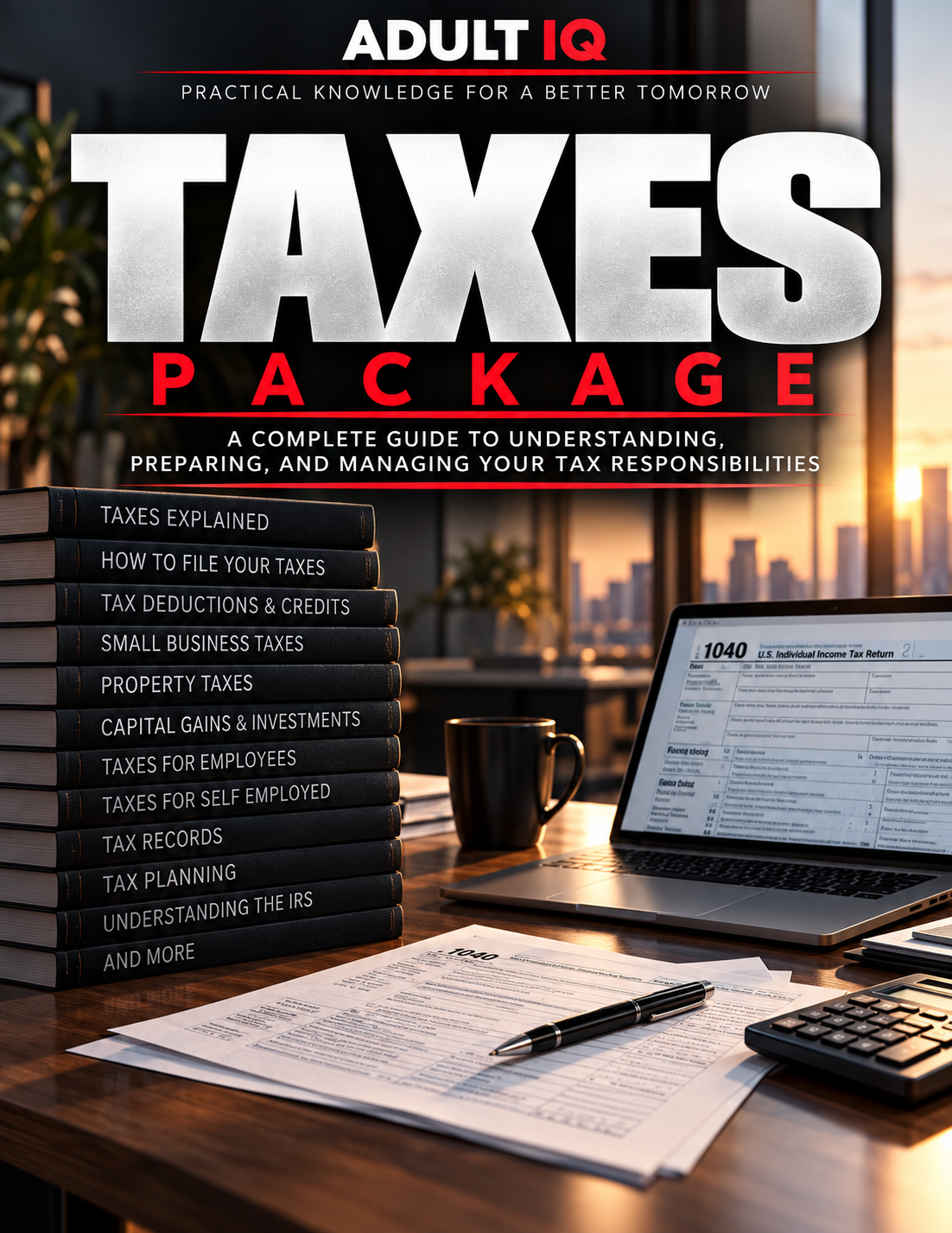
Taxes Package.
ADULT IQ TAXES PACKAGE
Understand Your Taxes. Know Your Responsibilities. Make More Informed Financial Decisions.
Taxes are part of everyday life, whether you earn a salary, operate a small business, work for yourself, own property, or invest your money. Yet many people file their taxes without fully understanding how the system works, which records they should keep, what deductions or credits may apply, or how tax decisions can affect their finances.
The Adult IQ Taxes Package brings together 14 educational resources designed to help you better understand the American tax system, prepare for tax season, organise important records, and recognise the tax considerations that may apply to your income, property, investments, and business activities.
From understanding the basics of taxation and filing a tax return to exploring capital gains, property taxes, business taxes, deductions, tax planning, and the role of the IRS, this package gives you a broad educational foundation for navigating tax-related responsibilities with greater awareness.
Whether you are an employee, self-employed professional, small business owner, property owner, investor, or someone who simply wants to understand taxes better, this collection helps you build knowledge before important tax decisions need to be made.
WHAT YOU WILL RECEIVE
1. Capital Gains & Investment Tax Worksheet
Selling investments or other assets can create tax consequences that affect how much money you ultimately keep. Understanding the difference between proceeds, cost basis, and taxable gains or losses is an important part of investment-related tax awareness.
This worksheet is designed to support the organisation and review of information relating to capital gains and investment transactions.
Explore the importance of recording purchase and sale information, identifying potential gains or losses, and gathering the documentation needed when reviewing investment activity for tax purposes.
What you will gain: A practical starting point for organising investment transaction information and preparing for a more informed review of potential capital gains tax obligations.
2. Capital Gains & Investment Taxes Explained
Investment-related taxes can become complicated when you sell stocks, funds, property, or other assets. The tax treatment may depend on the type of asset, how long it was held, the gain or loss involved, and your individual circumstances.
This handbook introduces capital gains and investment tax fundamentals, helping you understand key terminology and the general tax considerations associated with selling investments.
Learn about cost basis, realised gains and losses, short-term and long-term capital gains, and why accurate records matter when reporting taxable transactions.
What you will gain: A clearer understanding of investment-related tax concepts and the information you may need when reviewing transactions or preparing your tax return.
3. How to File Your Taxes
Filing a tax return can feel overwhelming if you do not know which documents to gather, which information to review, or what steps are involved.
This handbook introduces the general process of preparing and filing an individual tax return in the United States.
Explore common tax documents, income reporting, deductions, credits, filing deadlines, and the importance of checking your information before submitting a return.
Understand the general differences between preparing a return yourself and using a qualified tax professional, along with the importance of choosing appropriate filing methods for your circumstances.
What you will gain: A clearer overview of the tax filing process, better preparation for tax season, and an understanding of the information and decisions involved in submitting a return.
4. Property Taxes Explained — Workbook
Property taxes are an important ongoing expense for many homeowners and property investors. Understanding how property taxation works can help you plan for housing costs and recognise the information that may affect your tax bill.
This workbook explores property tax fundamentals, including assessed values, tax rates, property tax bills, payment responsibilities, and the general relationship between property assessments and local government revenue.
Learn why it is important to review property tax notices, understand local assessment procedures, monitor deadlines, and investigate the process for questioning an assessment where permitted.
What you will gain: A practical foundation for understanding property tax bills, organising relevant information, and identifying questions to ask your local tax assessor or property tax professional.
5. Property Taxes Explained
This handbook provides a broader introduction to property taxation and the responsibilities that may come with owning real estate.
Explore how property taxes generally work in the United States, why rates and assessment practices vary by location, and how property taxes can affect household budgets and property investment calculations.
Understand the importance of accounting for property taxes when estimating homeownership expenses, reviewing investment costs, and planning for future payments.
What you will gain: A better understanding of property tax terminology, the factors that can influence property tax bills, and the importance of including these costs in your financial planning.
6. Small Business Taxes Explained
Running a business introduces tax responsibilities that can differ significantly from those of an employee. Business structure, income, expenses, payroll, and other activities can all influence which tax requirements apply.
This handbook introduces key small business tax concepts, helping business owners understand the importance of accurate financial records and awareness of their reporting obligations.
Explore business income, potentially deductible expenses, estimated tax payments, employment taxes where applicable, recordkeeping, and the importance of understanding how your business structure affects taxation.
What you will gain: A stronger foundation for understanding small business tax responsibilities, organising financial information, and identifying the tax questions that may require professional guidance.
7. Tax Deductions & Credits Explained
Deductions and tax credits can affect your final tax liability, but they work differently and are subject to specific eligibility rules.
This handbook explores the general differences between deductions and credits and introduces common considerations involved in determining whether a tax benefit may apply to your circumstances.
Learn why documentation matters, why eligibility requirements must be checked carefully, and why a tax benefit should never be assumed simply because an expense seems work-related or financially necessary.
What you will gain: A clearer understanding of deductions and credits, the role they play in tax calculations, and the importance of checking eligibility and supporting documentation before claiming a tax benefit.
8. Tax Planning
Tax planning involves considering the potential tax consequences of financial decisions before the relevant transactions or deadlines occur.
This handbook introduces the role of tax planning in managing income, expenses, investments, business activities, and other financial responsibilities.
Explore the importance of reviewing your financial position throughout the year, maintaining accurate records, understanding applicable deadlines, and considering how major financial decisions may affect your tax situation.
What you will gain: A better understanding of proactive tax preparation and the value of considering tax implications before making important financial decisions.
9. Tax Records
Accurate recordkeeping is an essential part of managing tax responsibilities. Missing receipts, incomplete income records, and disorganised documents can make tax preparation more difficult and complicate the process of supporting information reported on a return.
This handbook focuses on organising and maintaining tax-related records, including income documentation, expense records, receipts, investment information, and other relevant financial documents.
Learn about creating consistent recordkeeping systems, protecting sensitive information, and understanding why different documents may need to be retained for different periods.
What you will gain: Practical guidance for organising tax documentation, improving recordkeeping habits, and preparing more efficiently for tax filing and future financial reviews.
10. Taxes Explained
Taxes influence personal income, business activity, purchases, property ownership, and many other parts of everyday life. Understanding the fundamentals helps you recognise why taxes are collected and how different forms of taxation affect individuals and businesses.
This handbook introduces general tax concepts, including taxable income, tax rates, withholding, deductions, credits, and the distinction between different types of taxes.
Develop a clearer understanding of common tax terminology and the role taxes play in personal finances and the wider economy.
What you will gain: A foundation in tax literacy that helps you better understand tax-related discussions, financial documents, and the responsibilities you may encounter throughout adult life.
11. Taxes for Employees
Employees may have taxes withheld from their paychecks, but understanding the difference between withholding and final tax liability is important when reviewing your income and preparing a tax return.
This handbook explores employee tax fundamentals, including wages, payroll withholding, common tax forms, employer-provided documentation, and the general process of reconciling withholding when filing a return.
Learn why it is important to review pay statements, keep relevant records, understand the information on your tax documents, and recognise when changes in employment or personal circumstances may affect your tax situation.
What you will gain: A clearer understanding of employee tax responsibilities, paycheck withholding, and the documents commonly used during tax preparation.
12. Taxes for the Self-Employed
Self-employment can offer flexibility and independence, but it also introduces financial and tax responsibilities that employees may not face in the same way.
This handbook introduces tax considerations for freelancers, independent contractors, sole proprietors, and other self-employed individuals.
Explore income tracking, business expense records, estimated tax payments, self-employment tax, and the importance of understanding which expenses may qualify for deductions under applicable rules.
Learn why separating business and personal records, monitoring income throughout the year, and preparing for tax payments can help you manage your responsibilities more effectively.
What you will gain: A better understanding of common self-employment tax concepts and the financial organisation needed to prepare for tax reporting obligations.
13. Understanding the IRS
The Internal Revenue Service (IRS) administers federal tax laws in the United States. Understanding its role, the information it provides, and the general responsibilities of taxpayers can make tax-related interactions less intimidating.
This handbook introduces the IRS and its role in tax administration, including tax returns, payments, refunds, notices, taxpayer accounts, and the importance of responding appropriately to official correspondence.
Explore why it is important to verify information through official IRS resources, keep copies of submitted documents, protect personal tax information, and understand where to look for authoritative guidance.
What you will gain: A clearer understanding of the IRS, its general functions, and how to approach common tax administration questions more confidently.
14. Understanding Your Paycheck
Your paycheck reflects more than the salary or hourly rate you earn. The amount deposited into your account may be affected by federal income tax withholding, Social Security and Medicare taxes, benefits, retirement contributions, and other deductions.
This handbook explores the information commonly found on a pay statement and helps you understand the difference between gross pay and take-home pay.
Learn how to review common paycheck entries, understand the purpose of withholding, identify deductions, and recognise why your take-home pay may differ from one pay period to another.
What you will gain: A stronger understanding of your paycheck, the deductions affecting your earnings, and the information to review when checking your compensation and payroll records.
WHAT THIS PACKAGE HELPS YOU DO
The 14 resources cover a broad range of tax topics relevant to everyday financial life.
Understand the tax system: Build familiarity with essential tax terminology and the general purpose of different taxes.
Prepare for tax season: Understand the filing process and the documents you may need.
Organise your records: Develop better habits for maintaining income, expense, investment, and tax documentation.
Understand employee taxes: Learn about paycheck withholding, payroll deductions, and common employee tax documents.
Navigate self-employment and business taxes: Explore income reporting, business records, and tax planning considerations.
Learn about investment and property taxes: Understand capital gains concepts and property tax responsibilities.
Understand deductions and credits: Learn how tax benefits work and why eligibility requirements matter.
Plan ahead: Recognise the value of reviewing tax implications before important financial decisions.
Together, these resources provide a broad educational foundation for understanding tax responsibilities across employment, self-employment, investing, and property ownership.
WHO IS THIS PACKAGE FOR?
The Adult IQ Taxes Package is ideal for:
Employees who want to understand their paychecks and tax withholding.
Individuals preparing to file their own tax returns.
Self-employed professionals and independent contractors.
Small business owners learning about business tax responsibilities.
Homeowners and property investors.
People buying or selling investments.
Individuals wanting to understand tax deductions, credits, and recordkeeping.
Anyone who wants to become more informed about the American tax system.
You do not need an accounting background to benefit. These handbooks are designed to help you understand the fundamentals, prepare better questions, and recognise when you may need qualified tax assistance.
WHY INVEST IN YOUR TAX KNOWLEDGE?
Taxes can affect how much of your income you keep, how you plan your finances, and what responsibilities you must meet throughout the year.
When you do not understand the basics, it can be difficult to recognise which documents matter, what questions to ask, or when a financial decision may have tax consequences.
The Adult IQ Taxes Package brings 14 educational resources together in one collection, covering tax fundamentals, filing, investment gains, property taxes, business taxes, employee and self-employed taxes, deductions, credits, planning, recordkeeping, and the IRS.
Instead of approaching tax season unprepared, you can start building your understanding before deadlines arrive and before important financial decisions need to be made.
DON'T LET TAX CONFUSION COST YOU TIME, MONEY, OR PEACE OF MIND.
Understanding taxes is an essential life skill — and you don't have to be an accountant to start learning.
Whether you're reviewing a paycheck, preparing a tax return, managing a business, investing in the markets, or owning property, tax knowledge can help you ask better questions and approach your responsibilities more confidently.
Give yourself the opportunity to understand the fundamentals, organise your records, and become more informed about the tax considerations that may affect your financial life.
GET PREPARED. GET INFORMED. TAKE CONTROL OF YOUR TAX KNOWLEDGE.
Purchase the Adult IQ Taxes Package today and gain access to 14 educational resources designed to help you understand the American tax system and navigate common tax responsibilities with greater awareness.
14 practical resources. Essential tax knowledge. One smart investment in your financial education.
Don't wait until a tax deadline or confusing notice leaves you scrambling for answers. Invest in your knowledge today and get your Adult IQ Taxes Package.
Important note: These resources provide general educational information about U.S. taxation and are not personalised tax, accounting, or legal advice. Federal, state, and local rules differ, and tax laws and thresholds can change. Eligibility for deductions, credits, exclusions, and other tax treatments depends on current law and individual circumstances. Always verify requirements with current IRS and relevant state or local tax authority guidance, or consult a qualified tax professional before filing or making significant tax-related decisions.