 Image 1 of 1
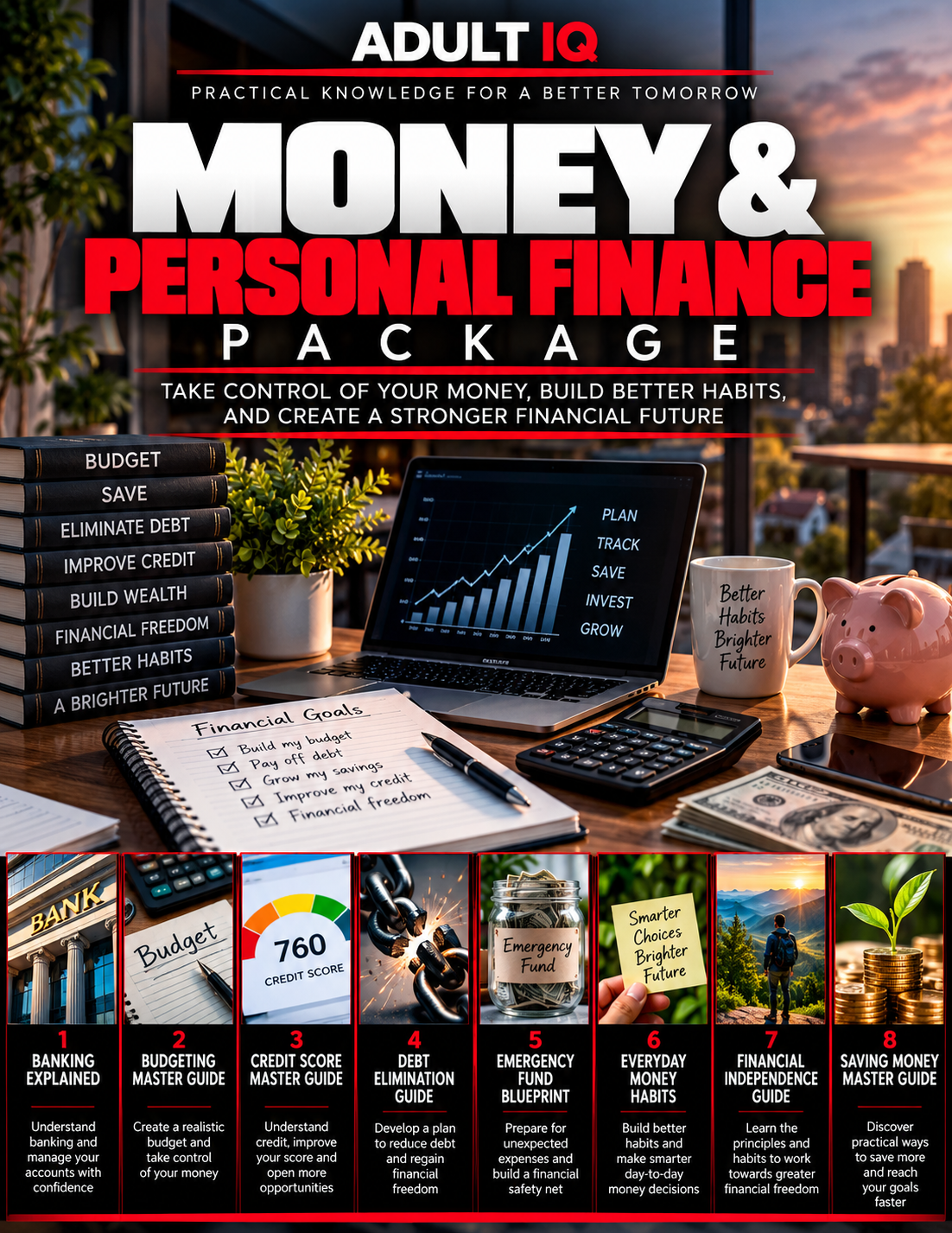
Money & Personal Finance Package.
MONEY & PERSONAL FINANCE PACKAGE
Take Control of Your Money. Build Better Habits. Create a Stronger Financial Future.
Your financial future is shaped by the decisions you make with your money every day. From managing your bank accounts and controlling spending to eliminating debt, building savings, improving your credit, and working towards financial independence, understanding how money works can make a real difference to your life.
Yet many people reach adulthood without ever being properly taught how to manage their finances. They struggle to create a realistic budget, live from payday to payday, carry unnecessary debt, or feel uncertain about how to prepare for unexpected expenses.
The Adult IQ Money & Personal Finance Package brings together eight practical educational handbooks designed to help you understand your finances, develop healthier money habits, and build a more organised approach to managing your income and expenses.
Whether you are starting your financial journey, trying to get out of debt, looking to strengthen your savings, or working towards greater financial independence, this package gives you a valuable foundation for making more informed financial decisions.
Stop guessing where your money goes. Start understanding how to manage it.
WHAT YOU WILL RECEIVE
1. Banking Explained
Understanding how banking works is a fundamental part of managing your money effectively. From choosing accounts to understanding fees, transfers, and everyday transactions, knowing how to use banking services can help you avoid unnecessary costs and manage your finances more confidently.
This handbook introduces the fundamentals of personal banking, including checking and savings accounts, debit cards, electronic payments, account statements, banking fees, and common banking services.
Learn about the importance of monitoring transactions, protecting your account information, recognising suspicious activity, and understanding the features and conditions attached to different banking products.
What you will gain: A clearer understanding of everyday banking, how to manage your accounts, what to look for when comparing banking services, and how to become a more informed banking customer.
2. Budgeting Master Guide
A budget gives you a clearer picture of where your money comes from, where it goes, and how much you have available for your priorities.
This handbook explores practical budgeting methods, income and expense tracking, fixed and variable costs, setting spending limits, and planning for upcoming bills and financial commitments.
Learn how to build a realistic budget around your actual circumstances, identify areas where spending could be reduced, and adjust your plan when your income or expenses change. Understand how budgeting can help you prepare for financial goals instead of simply reacting to each payday.
What you will gain: A practical foundation for creating and maintaining a budget, controlling spending, organising your bills, and making your money work more intentionally.
3. Credit Score Master Guide
Your credit history can influence important financial opportunities, including access to certain loans, credit cards, and other financial products. Understanding how credit works can help you recognise the habits that may strengthen or damage your credit profile.
This handbook introduces credit reports, credit scores, payment history, credit utilisation, length of credit history, and other factors commonly considered by credit scoring models.
Learn why paying bills on time, managing outstanding balances, checking your credit reports for errors, and applying for credit thoughtfully can matter. Explore how to recognise common credit misconceptions and develop more responsible credit habits.
What you will gain: A better understanding of credit scores and reports, the factors that may affect them, and practical steps for monitoring your credit and developing healthier credit management habits.
4. Debt Elimination Guide
Debt can place significant pressure on your finances, limit your choices, and make it harder to save for the future. However, understanding what you owe and developing a realistic repayment strategy can help you regain control of your financial situation.
This handbook explores debt assessment, repayment planning, interest costs, minimum payments, and common approaches to prioritising outstanding balances.
Learn about popular repayment strategies, including the debt snowball and debt avalanche methods, and understand the importance of reviewing interest rates, fees, repayment terms, and your available income before choosing an approach.
The guide also encourages you to recognise when debt becomes difficult to manage and when contacting creditors or seeking reputable financial counselling may be appropriate.
What you will gain: A clearer picture of your debt obligations, a stronger foundation for building a repayment plan, and a better understanding of the choices available when working towards becoming debt-free.
5. Emergency Fund Blueprint
Unexpected expenses can disrupt even a carefully planned budget. Car repairs, urgent household expenses, medical bills, or a temporary loss of income can quickly create financial stress when you have no savings to fall back on.
This handbook explains the purpose of an emergency fund and explores how to build a financial buffer gradually, even when money is tight.
Learn how to estimate potential emergency expenses, set a realistic savings target, identify opportunities to save, and establish consistent contributions that fit your budget. Understand why accessible savings can help reduce reliance on credit cards or loans when unexpected costs arise.
What you will gain: A practical starting point for establishing an emergency savings fund, preparing for unexpected expenses, and building greater financial resilience over time.
6. Everyday Money Habits
Financial progress is often influenced by the small decisions you repeat every day. Spending without tracking, making impulse purchases, overlooking subscriptions, or failing to plan for bills can gradually undermine your financial goals.
This handbook focuses on the everyday behaviours and routines that influence personal finances.
Explore spending awareness, mindful purchasing, reviewing recurring expenses, managing financial temptations, setting money goals, and developing consistent saving habits.
Learn how small, sustainable changes can help you become more intentional with your money and make financial decisions that better reflect your priorities.
What you will gain: Greater awareness of your spending patterns, practical ideas for improving everyday money habits, and a stronger foundation for making consistent progress towards your financial goals.
7. Financial Independence Guide
Financial independence means developing the financial resources and habits that give you greater control over your choices and future. The path looks different for everyone, depending on income, responsibilities, lifestyle, and long-term objectives.
This handbook explores the foundations of financial independence, including managing expenses, reducing unnecessary debt, building savings, setting financial goals, and understanding the relationship between income, spending, and wealth accumulation.
Learn why long-term financial progress often depends on consistent habits rather than quick fixes. Explore the importance of planning ahead, reviewing your progress, understanding financial trade-offs, and making decisions that align with your personal priorities.
What you will gain: A clearer understanding of the principles behind financial independence and a practical foundation for working towards greater financial stability, flexibility, and control over your future.
8. Saving Money Master Guide
Saving money is about more than putting aside whatever happens to be left at the end of the month. It involves creating a plan, identifying opportunities, and building habits that make saving a consistent part of your financial life.
This handbook explores everyday saving strategies, spending reviews, savings goals, comparison shopping, reducing recurring costs, and planning for larger purchases.
Learn how to identify potential savings without automatically sacrificing everything you enjoy, distinguish between needs and wants, and establish realistic targets for short-term and longer-term goals.
What you will gain: Practical ideas for finding savings opportunities, setting achievable financial targets, and developing a more consistent approach to building your savings.
WHAT THIS PACKAGE HELPS YOU ACHIEVE
The eight handbooks work together to cover the essential foundations of personal financial management.
Understand your money: Learn how banking works and develop a clearer picture of your financial position.
Take control of spending: Create a budget and build everyday habits that support your priorities.
Manage credit responsibly: Understand credit scores, credit reports, and the behaviours that may affect them.
Work towards eliminating debt: Explore repayment strategies and develop a more organised approach to outstanding balances.
Prepare for unexpected expenses: Learn how to build an emergency fund over time.
Strengthen your savings: Discover practical ways to save consistently and plan for future purchases.
Build towards financial independence: Understand the habits and principles that can support greater long-term financial stability.
Together, these resources provide a broad educational foundation for understanding your finances and approaching everyday money decisions with greater confidence.
WHO IS THIS PACKAGE FOR?
The Adult IQ Money & Personal Finance Package is ideal for:
Young adults learning to manage money independently.
Individuals who struggle to budget or control spending.
People living paycheck to paycheck who want to organise their finances.
Anyone looking for a structured approach to managing debt.
Individuals who want to understand credit scores and reports.
People building their first emergency fund.
Families looking to improve household financial organisation.
Anyone working towards greater savings, financial stability, or independence.
You do not need a financial background or a high income to begin learning. These handbooks provide a starting point for understanding your options and developing habits that can be adapted to your circumstances.
WHY INVEST IN YOUR FINANCIAL KNOWLEDGE?
Your income matters, but knowing how to manage the money you earn is equally important.
Without a clear understanding of budgeting, debt, credit, savings, and everyday spending, it is easy to lose track of your finances and postpone important goals. Learning the fundamentals can help you identify where your money goes, understand the choices available to you, and plan more effectively for the future.
The Adult IQ Money & Personal Finance Package brings eight practical handbooks together in one convenient collection, covering banking, budgeting, credit, debt elimination, emergency savings, everyday money habits, financial independence, and saving strategies.
Instead of piecing together scattered advice from countless sources, you can begin building your financial knowledge with a focused collection of resources designed around the real-world decisions adults face.
YOUR MONEY. YOUR FUTURE. YOUR RESPONSIBILITY.
Working hard for your money is important. Knowing how to manage it could change the way you approach your future.
If you are tired of wondering where your money goes, struggling to make savings progress, or feeling overwhelmed by financial decisions, this package gives you a practical place to start.
You do not need to change everything overnight. You need to understand your finances, recognise opportunities to improve, and begin developing better habits one decision at a time.
The Adult IQ Money & Personal Finance Package gives you eight educational handbooks to help you build that foundation.
TAKE THE FIRST STEP TOWARDS BETTER MONEY MANAGEMENT TODAY.
Purchase the Adult IQ Money & Personal Finance Package and get access to eight practical handbooks covering the financial skills that matter throughout adult life.
Eight handbooks. Essential money skills. One smart investment in your financial education.
Don't leave your financial future to guesswork. Get informed, take control of your money, and purchase your Adult IQ Money & Personal Finance Package today.
Important note: These handbooks provide general educational information and are not personalised financial, tax, credit, or debt advice. Financial circumstances and available options vary. Credit outcomes are not guaranteed, and debt repayment strategies should be assessed against individual circumstances. Consider consulting a qualified financial professional or reputable nonprofit credit counsellor when appropriate.